Sweet bread is one of those things that exists in almost every food culture on earth, and yet each version is distinct enough that comparing them feels like looking at entirely different traditions. The enriched dough of a French brioche shares almost nothing visually or texturally with a Haitian pain patate, and yet both are sweet breads in the fullest sense of the term, built around the idea of taking ordinary bread and making it something worth eating slowly and with attention.
This guide covers the most popular types of sweet bread from around the world, with particular depth on the types of Mexican sweet bread that make up one of the richest and most varied sweet bread traditions anywhere. Whether you bake at home, shop at a bakery, or are simply trying to understand what you are looking at when you walk into a Latin, Caribbean, or European bread section, this guide gives you the full picture.
What Makes Bread Sweet
Before getting into specific varieties, it helps to understand what separates sweet bread from standard bread beyond the obvious answer of sugar.
Most standard bread is made from flour, water, salt, and yeast. Sweet bread, across almost every tradition, is an enriched dough. That means fat, eggs, sugar, and often milk or cream are incorporated into the base dough alongside the flour and yeast. Each of these additions changes the structure and character of the bread in a specific way.
Fat, whether butter, lard, oil, or coconut milk, coats the gluten strands in the dough and produces a tender, soft crumb that holds moisture longer than a lean dough. Eggs add richness, color, and structure. Sugar feeds the yeast during fermentation, adds flavor, and contributes to the golden crust that enriched breads develop during baking. Milk softens the crumb further and adds a subtle sweetness beyond what the added sugar contributes.
The result of all of these additions is a bread that is richer, softer, more flavorful, and more perishable than lean bread. Most sweet breads are best eaten within a day or two of baking, which is part of why bakery sweet bread culture, buying fresh daily, is so central to the communities where these traditions are strongest.
Types of Mexican Sweet Bread
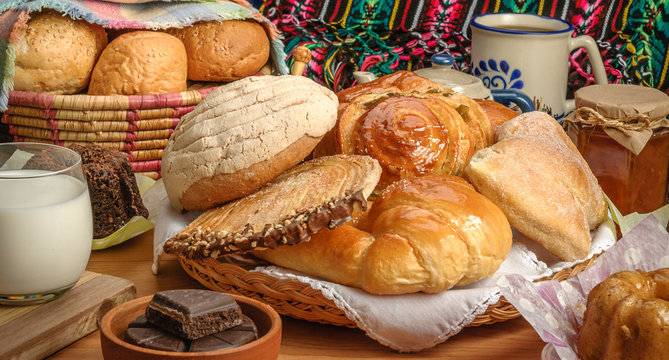
Mexico has one of the most developed and varied sweet bread traditions in the world. Pan dulce, which translates simply as sweet bread, is a broad category that encompasses dozens of distinct shapes, flavors, and textures. Mexican bakeries, called panaderías, typically display their pan dulce on open trays where customers select individual pieces with tongs and a tray, choosing from a rotating selection that changes daily and seasonally.
Understanding the types of Mexican sweet bread means understanding that pan dulce is as much about shape and decoration as it is about flavor. Many varieties share a similar base dough but are distinguished by their toppings, fillings, and the way they are formed before baking.
Conchas
Conchas are the most recognizable of all the types of Mexican sweet bread and likely the most widely available outside of Mexico itself. The name means shell, and the bread is named for the scored sugar paste topping that covers the dome of each round roll in a pattern that resembles a seashell or the ridges of a conch.
The base is a soft, slightly sweet enriched roll. The topping is a mixture of sugar, fat, and flour, colored white, pink, or chocolate brown, that is rolled thin, placed over the top of the raw dough, and scored in a crosshatch or fan pattern before baking. During baking, the topping sets into a crispy, crumbly shell while the interior remains pillowy and soft.
Conchas are eaten at breakfast or as an afternoon snack, traditionally dunked into hot chocolate, café de olla, or atole. They are one of the different types of sweet bread most likely to be found at a Latin grocery bakery outside of Mexico.
Cuernos
Cuernos are crescent-shaped sweet rolls, similar in form to a croissant but made from a softer, less laminated dough. The name means horns. They are typically coated in sugar before baking, which caramelizes on the outside and produces a lightly sticky, sweet crust over a soft interior.
Some versions are plain. Others are filled with jam, pastry cream, or chocolate. The shape is consistent across versions: a tapered crescent with pointed ends, formed by rolling a triangle of dough from the wide end toward the tip.
Polvorones
Polvorones are Mexican shortbread cookies that sit at the edge of what most people would call bread, but they appear consistently in panaderías alongside the yeast-leavened sweet breads and are considered part of the pan dulce family. The name comes from polvo, meaning dust or powder, which describes the crumbly, melt-in-your-mouth texture that comes from a very high fat-to-flour ratio and no eggs.
Traditional polvorones are made with lard, which produces a crumblier texture than butter. They are typically flavored with cinnamon and vanilla and rolled in powdered sugar or cinnamon sugar before serving. Some regional versions incorporate nuts, chocolate, or anise.
Pan de Muerto
Pan de muerto is one of the most culturally significant of all the types of Mexican sweet bread. It is made specifically for Día de los Muertos, the Day of the Dead celebration observed on November first and second, and it appears in bakeries and homes across Mexico and Mexican communities worldwide during that period.
The bread itself is a round, slightly domed orange-scented sweet roll glazed with sugar syrup and dusted with white sugar or sesame seeds. Decorative dough pieces are applied to the top before baking: crossed bone-shaped strips and a small round ball representing a skull. The flavors of orange zest and anise are characteristic and make pan de muerto distinct from most other pan dulce.
Orejas
Orejas, meaning ears, are the Mexican version of palmiers, the French puff pastry cookies made from laminated dough folded into a heart or ear shape and baked until caramelized and crispy. The name refers to their shape, which resembles a pair of ears.
Unlike most other pan dulce, orejas are made from a laminated dough layered with butter or lard and sugar rather than an enriched yeast dough. The result is flaky, crispy, and caramelized rather than soft and pillowy. They are eaten as a snack or dessert rather than at breakfast, and their texture is completely unlike the rest of the pan dulce family.
Roles de Canela
Roles de canela are Mexican cinnamon rolls, distinct from the North American version in their texture and presentation. Mexican cinnamon rolls are typically smaller and denser than their American counterparts, made from a less enriched dough with a higher proportion of cinnamon filling relative to bread. They are rolled tightly and cut into individual spirals, then baked close together so they pull apart at the table.
Some versions are glazed with a simple sugar syrup. Others are left plain. The cinnamon flavor is more pronounced than in most North American versions, which tend toward sweeter, cream cheese-frosted interpretations.
Semitas
Semitas are a regional pan dulce, particularly associated with the state of Puebla, made from a soft, slightly sweet roll flavored with piloncillo, anise, and sometimes orange zest. They are round and flat with a scored surface and a dense, slightly chewy crumb. Some versions are split and filled with jam or cheese.
The flavor profile of semitas is more complex than most pan dulce, with the anise and piloncillo creating a distinctive taste that is recognizably Mexican but unlike anything else in the pan dulce canon.
European Types of Sweet Bread
Brioche (France)
Brioche is the foundational European enriched sweet bread, made from a dough with an exceptionally high butter and egg content that produces a rich, golden, feather-soft crumb and a deep golden crust. A classic brioche dough may contain as much butter as flour by weight, which is what gives it the characteristic richness and the ability to stay moist and tender for several days.
Brioche is not heavily sweet by the standards of most pan dulce or American sweet breads. The sweetness is subtle, and the bread is used across a wide range of sweet and savory applications. Brioche buns are used for burgers. Brioche slices are used for French toast. Individual brioche à tête, the small round rolls with a topknot, are eaten with jam and butter at breakfast. The dough is also used as the base for more elaborate pastries including tarte tropézienne and kouign-amann.
Challah (Jewish)
Challah is a braided enriched bread with roots in Jewish tradition, eaten on Shabbat and Jewish holidays. It is made from a dough enriched with eggs and oil rather than butter, which keeps it pareve, meaning it contains no dairy and can be served alongside meat dishes in kosher cooking.
The dough is braided before baking, typically in a three or six strand braid, and brushed with egg wash to produce the characteristic deep brown, shiny crust. The crumb is soft and slightly sweet, with a tender pull that makes challah one of the most satisfying breads to tear by hand at the table.
Challah is one of the different types of sweet bread most commonly used for French toast, where its enriched structure and slight sweetness produce results that plain white bread cannot approach.
Stollen (Germany)
Stollen is a German Christmas bread, dense with dried fruit, nuts, and marzipan, dusted generously with powdered sugar, and aged for several weeks before eating. It is one of the most different of all the types of sweet bread from the breads that precede it in this list, because it is designed to improve with time rather than to be eaten fresh.
The fruit and spice mixture, typically including raisins, currants, candied citrus peel, and warm spices, is soaked in rum or brandy before being incorporated into the dough. The finished loaf is brushed with melted butter and buried in powdered sugar while still hot. A properly made stollen, wrapped and stored in a cool place, will last and continue to develop flavor for several weeks.
Hot Cross Buns (Britain)
Hot cross buns are a British sweet bread traditionally associated with Good Friday and the Easter season, though they are now eaten year-round in most British and Commonwealth countries. They are small, round, spiced buns made from an enriched dough studded with currants or raisins and flavored with cinnamon, nutmeg, and allspice. The characteristic white cross on top is piped from a flour paste before baking or drawn in icing after.
Panettone (Italy)
Panettone is an Italian sweet bread from Milan, eaten during the Christmas season, built from a highly enriched dough with a complex fermentation process that gives it a distinctive light, stringy crumb despite its high butter and egg content. It is studded with candied citrus peel and raisins and baked in a tall cylindrical paper mold that gives it its characteristic domed shape.
A properly made panettone requires a long, slow fermentation over one to three days and a natural leavening culture rather than commercial yeast, which is part of why mass-produced versions rarely approach the quality of artisan or homemade ones. The finished bread is light enough to tear into long, feathery strings and rich enough to feel like a celebration food.
Caribbean and Latin American Types of Sweet Bread
Pan de Mallorca (Puerto Rico)
Pan de Mallorca is a soft, coiled Puerto Rican sweet roll with roots in the mallorca bread of the Balearic Islands of Spain. The dough is enriched with butter and eggs, rolled thin, spread with more butter, coiled into a spiral, and baked until soft and golden. The finished roll is dusted generously with powdered sugar.
Pan de mallorca is eaten for breakfast or as a snack, often split and filled with ham and cheese in Puerto Rican cafeterias, which creates an unusual but genuinely satisfying combination of sweet, savory, and rich.
Pan Sobao (Puerto Rico)
Pan sobao is a Puerto Rican bread whose name means kneaded bread, a reference to the extended mixing process that gives it its characteristic soft, slightly elastic crumb. It is enriched with lard and sugar, producing a bread that is soft, slightly sweet, and far more flavorful than it appears from the outside.
Pan sobao is a daily bread in Puerto Rican households, eaten at breakfast with butter and coffee, used for sandwiches, or eaten plain. Its texture is closest to a soft white sandwich bread but with a richer flavor that comes from the lard enrichment.
Haitian Pain Patate
Pain patate is a Haitian sweet bread made from sweet potato, coconut milk, spices including cinnamon and nutmeg, raisins, and sometimes a small amount of flour. It is closer to a dense pudding bread or a baked sweet potato cake than to a yeast-leavened loaf, and the texture is moist, dense, and spiced in a way that makes it distinctly its own.
Pain patate is a traditional Haitian dessert bread, typically made for celebrations and family gatherings, and it reflects the resourcefulness of a cooking tradition that builds rich, satisfying desserts from the starchy vegetables and spices that are most available locally.
What to Look for When Buying Sweet Bread
Whether you are shopping at a panadería, a Caribbean bakery, or the bakery section of a local grocery store, a few indicators help you identify quality sweet bread worth buying.
Look for freshness signs. The best sweet bread is soft, fragrant, and yielding to the touch. A concha that has dried out will feel firm and the sugar topping will be fully hardened rather than slightly crumbly. Brioche that is past its peak will feel dense and dry at the edges. Buying from a bakery with high turnover is the most reliable way to get fresh sweet bread consistently.
Pay attention to color. Enriched breads should have a deep, even golden brown color from the egg wash and natural sugars in the dough. Pale, underbaked sweet bread has not developed its full flavor. Overly dark exteriors with pale interiors indicate uneven heat or an oven running too hot.
Ask what was baked today. A good bakery or bakery counter will know what came out of the oven most recently. Buying the freshest available item is almost always the right choice with sweet bread, which has a shorter peak window than lean breads.
Find Sweet Bread and Baking Supplies at Key Food North Miami
Key Food North Miami carries a selection of pan dulce and Caribbean sweet breads that reflects the cooking traditions of the Little River and North Miami community. The bakery and bread section stocks items familiar to Latin, Haitian, and Caribbean households, including sweet rolls and specialty breads that rotate with the seasons and local demand.
For home bakers, the store carries the enriched dough ingredients that all of these breads depend on: eggs, butter, flour, sugar, lard, coconut milk, raisins, and the spices that flavor everything from pan de muerto to pain patate. Whether you are buying ready-made sweet bread or building a baking project at home, Key Food North Miami has what you need on the same trip.
FAQs: Types of Sweet Bread
- What are the most common types of sweet bread?
The most common types of sweet bread worldwide include conchas, brioche, challah, hot cross buns, panettone, stollen, pan de mallorca, and Haitian pain patate. Each is an enriched bread built from a dough containing fat, eggs, and sugar in addition to flour and yeast, which gives sweet breads their characteristic soft, rich crumb and golden crust. - What are the most popular types of Mexican sweet bread?
The most popular types of Mexican sweet bread, collectively known as pan dulce, include conchas, cuernos, polvorones, pan de muerto, orejas, roles de canela, and semitas. Mexican panaderías typically carry dozens of varieties at once, with the selection rotating daily and seasonally. Conchas are the most widely recognized outside of Mexico. - What makes sweet bread different from regular bread?
Sweet bread is made from an enriched dough containing fat, eggs, sugar, and often milk or cream in addition to the flour, water, salt, and yeast used in standard bread. These additions produce a softer, richer crumb, a more golden crust, and a more perishable loaf that is best eaten within one to two days of baking. - What are the different types of sweet bread in Caribbean cooking?
Caribbean sweet bread traditions include Haitian pain patate, a sweet potato and coconut milk bread; Puerto Rican pan de mallorca and pan sobao; Jamaican hard dough bread in its sweeter versions; and coconut bread found across the English-speaking Caribbean. Each reflects the local ingredients and culinary influences of its home country. - How long does sweet bread stay fresh?
Most sweet breads are best eaten within one to two days of baking. Their enriched doughs retain moisture longer than lean breads but also go stale faster once that moisture begins to leave. Exceptions include stollen and some fruit-enriched breads designed to age and improve over several weeks. For everyday pan dulce and Caribbean sweet breads, buying fresh and eating the same day produces the best result. - Can I make sweet bread at home without a stand mixer?
Yes, though the process is more labor intensive. Enriched doughs benefit from extended kneading to develop the gluten structure that holds the fat and eggs in place. A stand mixer with a dough hook makes this easier, but bread bakers have been making brioche, challah, and pan dulce by hand for centuries. Expect to knead for 15 to 20 minutes by hand versus 8 to 10 minutes with a mixer. - Where can I buy pan dulce and Caribbean sweet bread in North Miami, FL?
Key Food North Miami carries sweet bread and pan dulce options that reflect the Latin, Haitian, and Caribbean cooking traditions of the Little River and North Miami community. The store also stocks the baking ingredients needed for homemade versions of any of the breads in this guide.