
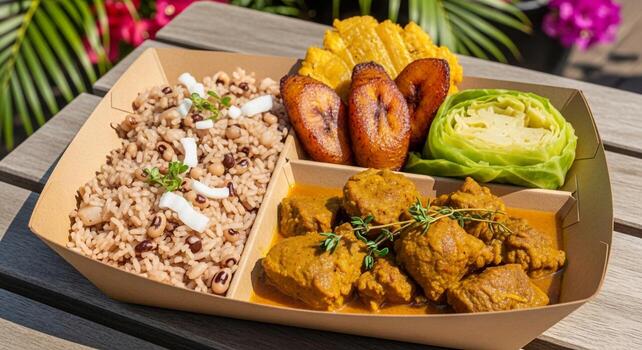
If you grew up in a Haitian household, legume needs no introduction. It is the stew that shows up on Sunday tables, at family gatherings, and on the days when someone in the kitchen decides to cook something that takes real time and produces something worth that time.
If you are coming to Haitian food for the first time, legume is one of the best places to start. It is hearty, deeply flavored, built from vegetables and meat cooked low and slow until everything melds into a thick, almost creamy stew. It is served over white rice, often alongside Haitian food rice and beans, and it represents the kind of cooking that does not rush.
This guide covers what legume actually is, why it holds the place it does in Haitian food culture, and how to make it at home from start to finish.
What Is Legume in Haitian Food?
The name can be misleading to anyone who speaks French. In French, légume means vegetable. In Haitian Creole cooking, legume refers to a specific stew, one of the most famous Haitian food dishes, built around a combination of vegetables and meat slow-cooked together until the vegetables break down almost completely into a thick, unified sauce.
It is not a light vegetable dish. It is not a soup. It is a dense, rich stew where the vegetables are the body of the sauce rather than additions floating in broth. By the time legume is done, the eggplant has dissolved, the spinach has melted into the base, the cabbage has softened entirely, and the whole pot carries a deep, layered flavor that comes from the combination of epis, the Haitian seasoning base, and the slow breakdown of every ingredient in it.
The proteins most commonly used are beef, crab, or a combination of both. Some versions include shrimp. Some households make it with goat. The vegetable combination varies by family and by what is available, but the core typically includes eggplant, chayote, cabbage, spinach or watercress, green beans, and sometimes carrots. Each family has its version, and the differences between them are part of what makes legume a living recipe rather than a fixed formula.
Why Legume Holds Such a Strong Place in Haitian Food Culture
Legume is not an everyday meal. It is a weekend dish, a Sunday dish, a dish that signals someone in the family had the time and the intention to cook something meaningful. That distinction matters in Haitian food culture, where the line between a quick weeknight meal and a proper Sunday pot is clear and respected.
Part of what gives legume its status is the time it takes. You cannot rush it. The vegetables need to be prepped individually. The meat needs to be seasoned and browned. The epis needs to cook into the base before the vegetables go in. And then the whole pot needs time to simmer until the eggplant dissolves and the stew reaches its characteristic thick consistency. That process, start to finish, is a commitment of two to three hours, and the result shows it.
It is also a dish that carries memory. Most Haitians who grew up eating legume associate it with a specific person’s version, a grandmother’s pot, a mother’s adjustments, a family argument about whether it should have crab or not. Learning to cook haitian food recipe staples like legume is often how those memories get carried forward into the next generation.
The Vegetables That Go Into Legume
The vegetable combination in legume is flexible, but certain ingredients appear in almost every version and are worth understanding before you start.
Eggplant is the structural backbone of legume. It breaks down during cooking and becomes the thick, creamy body of the stew. Without eggplant, or without cooking it long enough to dissolve, the stew never reaches the right consistency. Use a standard globe eggplant, cut into large chunks.
Chayote, also called christophine or mirliton, is a mild, firm squash that holds its shape slightly longer than eggplant during cooking. It adds texture and mild sweetness to the stew. It is widely available in Caribbean and Latin grocery stores and in the tropical produce section of a well-stocked North Miami grocery.
Cabbage adds body and a slight bitterness that balances the richness of the stew. It is usually added in thick wedges and allowed to cook down substantially.
Spinach or watercress adds color, a slight iron-forward bitterness, and additional body as it wilts into the sauce. Watercress is the more traditional choice in Haitian cooking and has a more pronounced peppery flavor. Spinach is a common substitute and works well.
Green beans add texture and a fresh vegetable note that persists slightly even after extended cooking.
Carrots appear in some family versions and not others. They add mild sweetness and hold their shape well through the cooking process.
The Protein: Beef, Crab, or Both
The most traditional version of legume includes both beef and crab, which gives the stew two distinct flavor profiles working together. The beef adds richness and body. The crab adds a sweet, briny depth that comes through in the finished sauce in a way that is hard to replicate with anything else.
For a simpler version, beef alone works well. Use stew beef cut into two-inch pieces, or short ribs if you want more collagen and deeper flavor from the bones. Season it with epis, salt, and black pepper and brown it before adding the vegetables.
If using crab, whole blue crabs or cleaned crab sections are both used in Haitian legume. The crab is typically added partway through cooking so it does not overcook, and it infuses the entire stew with its flavor as the pot finishes.
How to Make Legume: The Full Recipe
This recipe makes enough to serve four to six people generously over rice.
What you need:
For the protein: one and a half pounds of stew beef cut into two-inch pieces, and two to three whole blue crabs cleaned and halved, or an equivalent amount of crab sections.
For the vegetables: one medium globe eggplant cut into large chunks, two chayotes peeled and cut into wedges, a quarter head of cabbage cut into thick pieces, two cups of spinach or watercress, a handful of green beans trimmed, and two carrots cut into thick rounds if using.
For the epis and seasoning: four cloves of garlic, three scallions, a quarter cup of fresh parsley, four sprigs of fresh thyme, half a scotch bonnet pepper or a full one depending on your heat preference, half a green bell pepper, the juice of one lime or sour orange, two tablespoons of olive or vegetable oil, and salt and black pepper to taste. Blend all of this together into a smooth paste.
For cooking: two tablespoons of cooking oil, one small onion sliced, two tablespoons of tomato paste, and a cup of water or light beef broth.
Step one: Season and brown the beef.
Coat the beef generously with about half of the epis paste, salt, and black pepper. Let it marinate for at least 30 minutes and up to overnight in the refrigerator. Heat cooking oil in a large heavy pot over medium-high heat. Brown the beef in batches, getting good color on each piece. Remove and set aside.
Step two: Build the base.
In the same pot, lower the heat to medium and add the sliced onion. Cook for two to three minutes until softened. Add the remaining epis paste and the tomato paste. Cook for four to five minutes, stirring frequently, until the epis darkens slightly and smells fragrant. This step is important. The epis needs to cook into the oil and lose its raw edge before anything else goes in.
Step three: Add the beef and start building.
Return the browned beef to the pot. Add the water or broth. Stir to combine everything. Bring to a simmer, cover, and cook for 30 minutes until the beef starts to become tender.
Step four: Add the vegetables in stages.
Start with the vegetables that take the longest to cook. Add the eggplant, chayote, cabbage, and carrots if using. Stir to coat everything in the base. Cover and cook for 20 minutes, stirring occasionally. The eggplant will begin to break down.
Add the green beans and spinach or watercress. If using crab, add it now as well. Stir, cover, and cook for another 20 to 25 minutes. The stew should be thickening as the eggplant dissolves completely into the sauce.
Step five: Finish and adjust.
Remove the lid and cook uncovered for the final 10 to 15 minutes, stirring regularly, until the stew reaches a thick, dense consistency where the sauce coats the back of a spoon heavily. Taste and adjust salt. The finished legume should not be soupy. It should be thick enough that a spoonful holds its shape loosely.
Step six: Serve.
Serve over white rice, alongside Haitian food rice and beans if you are making a full Sunday spread. Pikliz on the side is traditional and cuts through the richness of the stew well.
Tips for Getting Legume Right
Do not rush the eggplant. The consistency of legume depends on the eggplant dissolving into the sauce. If you cut it too thick or do not give it enough time, the stew stays thin and the vegetables remain separate rather than unified. Give it the time it needs.
Cook the epis properly. Raw epis has a sharp, almost harsh flavor. Cooked epis that has had time to caramelize slightly in oil and tomato paste has a rounded, deep flavor that carries the whole dish. Four to five minutes of active cooking at this stage is not optional.
Use a heavy pot. A Dutch oven or heavy-bottomed pot distributes heat evenly and prevents the bottom of the stew from scorching during the long cooking time. Thin pots create hot spots that burn the base before the top cooks through.
Taste at every stage. Legume is a forgiving recipe but it needs salt adjusted at multiple points as the vegetables release their liquid and the stew concentrates. Taste after the beef stage, after the vegetables go in, and again at the finish.
Make more than you think you need. Legume reheats beautifully and many people find it tastes better the next day after the flavors have continued to develop overnight. It keeps well in the refrigerator for three to four days and freezes well for up to two months.
What to Serve With Legume
Legume is almost always served over white rice. The thick stew works with rice the way a sauce works with pasta. The rice absorbs the flavors and gives the stew something to bind to.
Haitian food rice and beans, diri kole ak pwa, is the fuller version of that base. Red kidney beans cooked with rice in coconut milk and aromatics produce a rich, slightly sweet grain that pairs exceptionally well with the savory intensity of legume. If you are cooking for a group or making a full Sunday meal, rice and beans alongside legume is the standard and correct combination.
Pikliz, the spicy pickled cabbage and carrot condiment, is an essential accompaniment. Its acidity and heat cut through the richness of the stew and reset the palate between bites. Fried plantains, either tostones or sweet maduros depending on the ripeness of the plantain, round out the plate.
Find the Ingredients at Key Food North Miami
Every ingredient in this recipe is available at Key Food North Miami. The produce section carries eggplant, chayote, cabbage, watercress, and the tropical vegetables that appear in Haitian cooking regularly. The meat counter has stew beef and short ribs suited for slow-cooked preparations. The seafood counter carries crab when in season. The pantry section carries epis if you prefer to buy it prepared, along with scotch bonnet peppers, thyme, scallions, and everything else in the seasoning base.
If you are cooking legume for the first time, Key Food North Miami is built to be your one-stop shop for this recipe. Pick up everything on the same trip, take the time the dish requires, and put something on the table that reflects one of the most famous Haitian food traditions in one pot.
FAQs: Legume Haitian Food
- What is legume in Haitian food?
Legume is a traditional Haitian stew made from a combination of vegetables, typically eggplant, chayote, cabbage, spinach or watercress, and green beans, slow-cooked with seasoned meat and crab until the vegetables break down into a thick, unified sauce. It is one of the most famous Haitian food dishes and is traditionally served over white rice, often alongside Haitian food rice and beans. - What does legume taste like?
Legume has a deep, layered, savory flavor built from epis, the Haitian seasoning base, slow-cooked meat, and the natural breakdown of multiple vegetables into a thick stew. The eggplant dissolves and gives the sauce a slightly creamy body. The crab, when included, adds a sweet, briny depth that runs through the entire dish. It is rich, filling, and distinctly Haitian in flavor. - What protein is used in Haitian legume?
The most traditional version uses beef and crab together. Stew beef or short ribs are seasoned with epis and browned before the vegetables are added. Crab, typically blue crab, is added partway through cooking and infuses the stew with its flavor. Some versions use shrimp, goat, or beef alone depending on the family’s tradition and what is available. - How long does it take to cook legume?
Legume takes two to three hours from start to finish, including prep time, browning the meat, cooking the epis base, and the extended simmer needed for the vegetables to break down properly. It is a weekend or Sunday dish, not a weeknight meal. The time investment is part of what gives it its significance in Haitian food culture. - Can I make legume without crab?
Yes. Beef alone produces a very good legume, though it will have a different flavor profile than the beef and crab combination. If crab is not available or not to your preference, increase the amount of beef slightly and make sure the epis is cooked thoroughly to build as much depth in the base as possible. - What is the difference between legume and soup joumou?
Both are famous Haitian food dishes and both involve slow cooking, but they are distinct preparations. Soup joumou is a soup built around a squash base, traditionally eaten on Haitian Independence Day on January first. Legume is a thick vegetable and meat stew with no squash base, served year-round. Both use epis as a seasoning foundation but produce very different results. - What do you serve with Haitian legume?
Legume is served over white rice as the standard base. Haitian food rice and beans, diri kole ak pwa, is the fuller and more traditional accompaniment for a Sunday meal. Pikliz, the spicy pickled condiment, is served alongside to cut through the richness of the stew. Fried plantains complete the plate. - Where can I find the ingredients for Haitian legume in North Miami?
Key Food North Miami carries the vegetables, meat, seafood, and pantry items needed for legume in one stop. Eggplant, chayote, watercress, scotch bonnet peppers, stew beef, crab when in season, and prepared epis are all available in the store. It is built to serve the cooking needs of the Little River and North Miami Haitian community.