
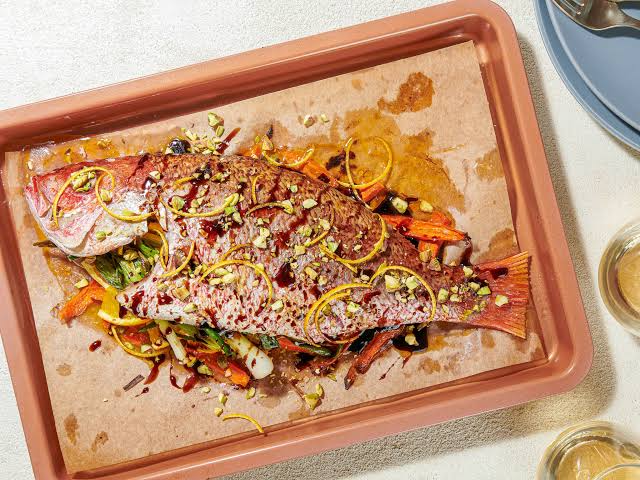
Walking up to a fish counter and pointing at a whole fish can feel intimidating if you have never cooked one before. It looks like more work than a fillet. It looks like something that requires a skill you have not learned yet. In most cases, neither of those things is true.
Whole fish is one of the most forgiving things you can cook, and in Caribbean and Latin cooking traditions, it is the standard rather than the exception. If you buy seafood in North Miami, FL and want to get more out of your fish counter visits, learning to cook whole fish opens up a wider range of dishes, better flavor, and often a better price per pound than pre-cut fillets.
This guide covers everything a beginner needs to know: why whole fish is worth choosing, how to talk to the fishmonger, the three foundational cooking methods, how to season for Caribbean and Latin preparations, how to know when it is done, and how to serve it at the table. It closes with a simple Caribbean fried snapper recipe you can make on the same trip you buy the fish.
Why Whole Fish Is Often Fresher Than Fillets
The first thing to understand about whole fish is why Caribbean and Latin cooks prefer it, and the answer starts with freshness.
When a fish is sold whole, you can assess its quality directly. The eyes tell you when it was caught. Clear, bright, slightly raised eyes mean the fish is fresh. Cloudy, sunken, or flat eyes mean it has been sitting too long. The gills should be deep red or pink, not brown or gray. The skin should look moist and bright, not dull or dry. The flesh should spring back when pressed and not leave an indentation.
A fillet gives you none of that information. Once a fish is cut and portioned, the most reliable freshness signals disappear. You are left with color and smell, which are useful but incomplete. This is why fish market whole fish is often a more reliable quality purchase than a pre-cut fillet, and why seasoned fish market shoppers in Caribbean and Latin communities almost always buy whole.
Beyond freshness signaling, cooking a fish on the bone produces better flavor. The bones and skin contribute to the overall taste during cooking, keeping the flesh moist and adding depth that a boneless fillet simply cannot replicate. This is especially important in high-heat preparations like frying and grilling, where the skin crisps and the bones protect the interior from drying out.
How to Talk to the Fish Counter About Whole Fish
Buying a whole fish is a short conversation, not a complicated transaction. The fish counter at a store serving the North Miami community handles these requests all day. Here is how to make that conversation useful.
Tell them what you are cooking. The preparation method changes what cut and size works best. Grilling and frying favor fish in the one to two pound range for individual portions. Baking can accommodate larger fish. If you mention the dish, the fishmonger can guide you toward the right size from what is available that day.
Ask for it cleaned, scaled, and gutted. Most fish counters offering seafood in North Miami, FL will clean the fish for you at no extra charge. Ask specifically for scaled, gutted, and head-on unless you have a reason to remove the head. Head-on fish cooks more evenly and looks better on the plate, which matters for dishes like pwason boukannen and escovitch where the whole fish is presented at the table.
Ask about scoring. Scoring means making diagonal cuts through the skin down to the bone on both sides of the fish. It allows seasoning to penetrate deeply, helps the fish cook evenly, and creates the characteristic appearance of grilled and fried whole fish in Caribbean cooking. Many counters will score for you if you ask. If not, you can do it at home with a sharp knife.
Ask what is fresh today. Whole fish availability shifts with what landed locally. Whole red snapper is the most commonly requested species for Caribbean preparations, but yellowtail snapper, porgy, and whole tilapia are all solid alternatives depending on what is available. Let the counter guide you toward the freshest option that fits your preparation.
Three Foundational Whole Fish Cooking Methods
Method One: Frying
Frying is the most common whole fish preparation in Haitian and Caribbean cooking, and it is an excellent starting point for beginners because it is fast, forgiving, and produces a dramatically satisfying result.
The fish is seasoned, dusted lightly with flour or left plain depending on the recipe, then submerged or partially submerged in hot oil until the skin is deep golden brown and crispy. The interior steams inside the crust, staying moist while the exterior becomes crunchy.
The right fish size for frying. A one to one and a half pound fish fits comfortably in a standard deep pan or Dutch oven and cooks evenly without requiring a specialized fryer. Larger fish are harder to submerge and cook unevenly. If you want to feed multiple people, fry multiple smaller fish rather than one large one.
Oil temperature and timing. Heat your oil to around 350 degrees Fahrenheit before adding the fish. A thermometer is helpful but not essential. You can test the oil by dipping the tip of the fish tail in. If it sizzles immediately and steadily, the oil is ready. A one pound fish takes approximately five to seven minutes per side depending on thickness. A one and a half pound fish may need eight to ten minutes per side.
How to tell when it is done. The skin will be deeply browned and crispy all over. The flesh at the thickest part, just behind the head, should be opaque and pull away from the bone cleanly when you test it with a fork. The eyes will have turned white and slightly raised. If the flesh near the spine is still translucent, give it another two minutes per side.
Method Two: Grilling
Grilling a whole fish produces the smoky, charred result that defines pwason boukannen and many other Caribbean grilled fish traditions. It requires slightly more attention than frying but is not technically difficult once you understand how heat works on a grill.
Prepare the grill and the fish. Whether you are using charcoal or gas, the grill needs to be hot before the fish goes on. Medium-high heat, around 400 degrees Fahrenheit at the grate, gives you the char you want without burning the skin before the interior cooks. Oil the grill grates generously to prevent sticking, which is the most common problem when grilling whole fish.
Scoring is essential for grilling. The cuts allow heat to reach the interior and ensure the seasoning penetrates all the way to the bone. Make three to four diagonal cuts on each side, cutting through the skin and about halfway into the flesh.
Timing on the grill. A one pound fish takes approximately five to six minutes per side over medium-high heat. A one and a half to two pound fish needs seven to nine minutes per side. Do not move the fish for the first four to five minutes. It needs time to develop a crust that releases naturally from the grate. If you try to flip too early, the skin tears and the fish sticks.
How to tell when it is done. The skin will be charred in places and firm across the surface. Test at the thickest point by pulling the flesh gently away from the spine with a fork. Opaque flesh that separates cleanly from the bone means it is ready.
Method Three: Baking En Papillote
Baking a whole fish in parchment or foil, a technique known as en papillote, is the gentlest of the three methods and produces moist, aromatic results with very little active cooking time. It is an excellent method for larger fish and for preparations where you want the fish to steam in its own juices alongside aromatics and vegetables.
The method. Place the seasoned fish on a large sheet of parchment paper or heavy aluminum foil. Scatter aromatics around and inside the cavity, sliced onion, bell pepper, thyme, scotch bonnet, tomato, and citrus all work well. Fold and seal the parchment tightly to create a sealed pouch. Bake at 400 degrees Fahrenheit.
Timing for baking. A one to one and a half pound fish takes approximately 20 to 25 minutes. A two pound fish needs 30 to 35 minutes. The sealed environment holds steam and cooks the fish gently and evenly, so there is less risk of overcooking than with frying or grilling.
How to tell when it is done. Open the pouch carefully, the steam inside is hot. The flesh at the thickest point should be opaque and separate from the bone easily. The juices inside the pouch will have concentrated into a flavorful light sauce.
How to Season Whole Fish for Caribbean and Latin Preparations
The seasoning approach changes the character of the dish entirely, and whole fish accepts bold seasoning better than fillets because the score cuts allow it to penetrate deeply.
Haitian epis marinade. Epis is the aromatic base of Haitian cooking, a blend of garlic, scallions, parsley, thyme, bell pepper, scotch bonnet, and sometimes a small amount of vinegar or lime juice, blended into a thick paste. Rub it generously into the score cuts, inside the cavity, and over the entire surface of the fish. Let it marinate for at least 30 minutes, and ideally two to four hours in the refrigerator. This seasoning works for both grilling and frying.
Jerk seasoning. Jerk originates in Jamaican cooking and is built around allspice and scotch bonnet as its defining flavors, rounded out with garlic, thyme, cinnamon, nutmeg, ginger, and brown sugar. A dry jerk rub pressed into the score cuts before grilling produces the classic charred, spiced exterior associated with jerk fish. A wet jerk marinade works for both grilling and baking.
Latin escabeche style. Escabeche is a Spanish and Latin American technique that involves frying a whole fish and then topping it with a vinegar-based pickled vegetable mixture of onion, carrot, bell pepper, scotch bonnet, and allspice. The vinegar and aromatics are briefly cooked and poured hot over the fried fish, which is then left to rest and absorb the marinade before serving at room temperature. This is the preparation most closely associated with escovitch fish in Jamaican and broader Caribbean cooking.
Simple citrus and garlic. For a lighter preparation that lets the fish speak for itself, a marinade of lime juice, sour orange, garlic, fresh thyme, salt, and black pepper rubbed into the scores and cavity is enough. This works for all three cooking methods and pairs well with both Caribbean and Latin accompaniments.
How to Serve and Break Down a Whole Fish at the Table
Serving a whole fish at the table is straightforward once you know the approach. You do not need special tools, just a fork and a spoon or two forks.
Start with the top side of the fish. Run a fork along the lateral line, the visible seam that runs down the center of the fish from head to tail, to divide the top fillet into two sections. Use a spoon or spatula to lift the flesh away from the bones in portions. The scored cuts make this easier by creating natural separation points.
Once the top side is served, lift the spine from the tail end. It should come away cleanly as a single piece, taking most of the small bones with it. The bottom fillet can then be served directly from the plate.
The cheeks, the small pockets of flesh in the cheek area just behind the eye, are considered the most tender and flavorful part of the fish. In Caribbean dining culture, they often go to the guest of honor or whoever cooked the meal. Use a fork to scoop them out after the main fillets are served.
A Simple Caribbean Fried Snapper Recipe
This recipe is built around ingredients you can source on the same trip you buy the fish at Key Food North Miami. It follows the Haitian-influenced preparation common in Little River kitchens.
What to pick up at the fish counter and store:
One whole red snapper, approximately one to one and a half pounds, scaled, gutted, and scored. Garlic, scallions, fresh thyme, parsley, scotch bonnet pepper, one lime, salt, black pepper, and vegetable oil for frying. Epis if available prepared, or the ingredients above to blend your own. Optional: a small amount of flour for dusting.
Preparation:
Blend garlic, scallions, thyme, parsley, scotch bonnet, lime juice, salt, and black pepper into a paste. This is your epis base. Rub it thoroughly into the score cuts, inside the cavity, and over the surface of the fish. Let it marinate for at least 30 minutes at room temperature or up to four hours covered in the refrigerator.
Cooking:
Heat two to three inches of vegetable oil in a deep pan or Dutch oven over medium-high heat to approximately 350 degrees Fahrenheit. If dusting with flour, shake off the excess before the fish goes in. Lower the fish carefully into the oil, angling it away from you to avoid splashing. Fry for six to eight minutes per side depending on thickness. The skin should be deep golden brown and crispy. The flesh at the thickest point should be opaque and pull away from the spine cleanly when tested.
Serving:
Drain briefly on a wire rack or paper towel. Serve with pikliz, rice and beans, fried plantains, and sliced avocado. Squeeze fresh lime over the top before eating.
That is the meal. It comes together in under an hour including marinating time, it costs less than most restaurant versions, and it tastes like the neighborhood it came from.
Start With a Fresh Whole Fish From Key Food North Miami
The fish counter at Key Food North Miami carries whole fish suited for every preparation in this guide. Whole red snapper, yellowtail snapper, porgy, and other species rotate based on what is fresh and landing locally. The staff can clean, scale, gut, and score the fish for you, and can advise on size and species based on what came in that day.
If you buy seafood in North Miami, FL and have been sticking to fillets out of habit or uncertainty, a whole fish from the counter is worth trying on your next visit. Ask for it cleaned and scored, pick up the aromatics on the same trip, and follow the fried snapper recipe above. The first time you put a whole crispy snapper on the table, you will understand why Caribbean cooks have been doing it this way all along.
FAQs: Cooking Whole Fish for Beginners
- Is cooking whole fish harder than cooking fillets? Not significantly. Whole fish is actually more forgiving in some ways because the skin and bones protect the flesh from drying out during high-heat cooking. The main adjustment is learning to read doneness at the thickest part of the fish rather than across a flat fillet, and understanding that the cooking time is longer than a fillet of the same species.
- What whole fish is best for beginners buying seafood in North Miami, FL? A whole red snapper is the best starting point. It is widely available, the right size for individual portions, firm enough to handle frying and grilling without falling apart, and flavorful enough to respond well to Caribbean seasonings. Ask the fish counter what came in fresh and let them guide you if snapper is not available that day.
- Can I ask the fish counter to clean and score the fish for me? Yes. Most fish counters that handle whole fish will scale, gut, and score the fish at no extra charge. Ask specifically for all three when you order. Scoring, the diagonal cuts through the skin, is especially important for Haitian and Caribbean preparations where the seasoning needs to penetrate deeply.
- What oil and temperature should I use for frying a whole fish? Use a neutral oil with a high smoke point such as vegetable, canola, or peanut oil. Heat it to approximately 350 degrees Fahrenheit before adding the fish. Too low and the fish absorbs oil and does not crisp. Too high and the skin burns before the interior cooks through.
- How do I know when a whole fish is done cooking? Test at the thickest point, just behind the head. Pull the flesh gently away from the spine with a fork. If it separates cleanly and is fully opaque with no translucency near the bone, it is done. For fried fish, the skin will be deep golden brown and crispy. For grilled fish, it will be charred in places and firm across the surface.
- What are the best Caribbean seasonings for whole fish? Haitian epis, a blended paste of garlic, scallions, thyme, parsley, scotch bonnet, and lime, is the most versatile starting point for Caribbean whole fish preparations. Jerk seasoning built on allspice and scotch bonnet works well for grilling. A simple citrus and garlic marinade is a lighter option that suits all three cooking methods.
- Where can I buy fresh whole fish for these recipes in North Miami, FL? Key Food North Miami carries whole fish at the seafood counter with Caribbean and Haitian cooking traditions in mind. Ask what came in fresh that day, request cleaning and scoring, and pick up the seasonings and aromatics you need on the same trip.