When seafood tastes “off,” the problem usually starts long before your kitchen.
Freshness is a chain. If one link fails (delivery temps, storage, display ice, clean handling, or how it gets transported home), seafood can lose quality fast. That is why a fish market North Miami shoppers trust is not just selling fish. It is managing temperature, time, sanitation, and traceability every step of the way.
If you shop at a North Miami seafood market often, or you are trying to find fresh fish in North Miami for weeknight meals, here is what the best fish departments do behind the scenes to keep seafood safe and genuinely fresh.
1) They treat temperature control like the whole job
Seafood is highly time- and temperature-sensitive. The safest operations build everything around keeping seafood cold and moving quickly.
At the consumer level, FDA guidance reinforces the basics: keep refrigerated foods cold, use a thermometer to confirm the fridge is at 40°F or below, and refrigerate or freeze perishables (including seafood) within 2 hours of purchase (or within 1 hour when it is very hot outside).
A strong seafood handling North Miami routine starts with the same principle, just scaled up:
- Limit how long product is out of refrigeration during receiving and prep
- Maintain cold storage at safe temps
- Keep displays properly iced or chilled
- Reduce “warm exposure” during wrapping and customer service
That is how “fresh” stays fresh.
2) They inspect product at receiving before it ever hits the case
The best freshness decisions happen at the back door.
When seafood arrives, quality checks typically focus on:
- packaging condition (no leaks, no torn seals, no questionable liquid buildup)
- product temperature and icing condition
- smell and appearance (clean ocean smell, not sour or ammonia-like odors)
- time in transit and whether the load stayed properly chilled
Why it matters: once seafood warms up, you cannot reverse that loss. A good market would rather reject a questionable delivery than sell something that will disappoint customers later.
3) Cold storage is organized to prevent cross-contact and protect quality
Cold storage is not just “put it in the cooler.”
Good fish departments separate and label product to prevent cross-contamination and preserve quality, especially between:
- Raw seafood vs. ready-to-eat items
- Shellfish vs. finfish
- Stronger-smelling species vs. mild species
For home use, FDA recommends storing seafood in a clean refrigerator at 40°F or below if you will use it within 2 days, otherwise freezing it properly.
The same logic drives retail handling: keep product cold, keep it clean, and rotate inventory so older products are used first.
4) Display cases are designed to hold seafood safely, not just look nice
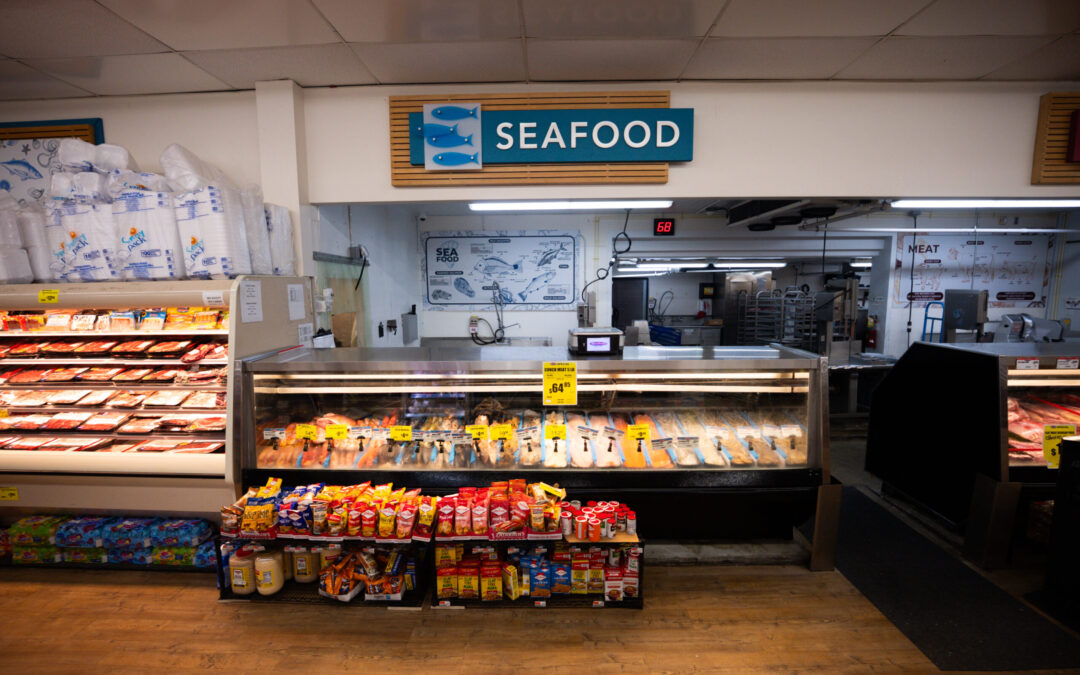
A seafood counter is not a decoration. It is a controlled environment.
Markets keep seafood safe and appealing by:
- Using proper icing or chilled display systems
- Minimizing direct handling and open exposure
- Preventing drips from contaminating other items
- Keeping tools and surfaces clean between different products
For shoppers, the “freshness tell” is usually simple: seafood should look properly chilled, not sitting warm or drying out under bright lights.
5) Shellfish has extra tracking rules, and the best markets take them seriously
Clams, oysters, and mussels are not handled like everything else. Traceability matters because shellfish can be tied to harvest areas and public health controls.
FDA Food Code guidance explains that molluscan shellfish identification records must be maintained, and that these records must be kept for 90 days to allow time for shellfish-borne illness to surface during investigations.
In practical terms, that means a responsible North Miami seafood market is not casually mixing shellfish sources without proper recordkeeping.
For shoppers, this is a sign of a serious operation: the staff can tell you where shellfish came from and maintains the identification documentation correctly.
6) Prepared seafood depends on strict cooling rules
Many markets sell more than raw fish. They also sell cooked or prepared items.
That creates a different safety challenge: cooling. When cooked foods cool too slowly, bacteria can grow.
FDA materials on cooling Time/Temperature Control for Safety foods describe a two-step cooling process: cool from 135°F to 70°F within 2 hours, then from 70°F to 41°F or less within the next 4 hours.
If a market sells cooked seafood dishes, seafood salads, or prepared trays, cooling control is one of the biggest “behind the scenes” safety factors.
7) Clean handling is not optional, because seafood contamination spreads fast
Seafood operations rely on strong sanitation habits because raw juices and residue can contaminate surfaces, tools, and hands quickly.
FDA consumer guidance emphasizes safe food handling habits like keeping perishables cold and using proper storage temperatures.
CDC also highlights prevention basics such as keeping your refrigerator at 40°F or below and knowing when to discard food before it spoils.
In retail practice, strong sanitation usually includes:
- Frequent handwashing and glove changes
- Sanitized cutting surfaces
- Separate tools or cleaning between species and tasks
- Proper cooler and display cleaning schedules
This is what keeps “fresh fish” from turning into “fish that tastes like the whole seafood case.”
8) The best fish markets also teach customers how to keep seafood fresh at home
Even perfect handling in-store cannot protect seafood if it sits warm in a car for 45 minutes.
FDA recommends putting seafood on ice or in the refrigerator/freezer soon after buying, using it within 2 days if refrigerated, and confirming the fridge stays at 40°F or below.
And when it is time to cook, FoodSafety.gov lists 145°F (63°C) as the safe minimum internal temperature for fish (whole or filet), and gives doneness cues like opaque flesh that separates easily with a fork.
If you want your fresh fish North Miami purchase to taste the way it should:
- Make seafood your last stop
- Use an insulated bag or cooler in the car
- Refrigerate immediately at home
- Cook to safe temps when needed
Get fresh seafood without the guesswork at Key Food North Miami
If you are looking for a fish market North Miami shoppers count on for reliable selection and a cleaner, colder, better-managed seafood counter experience, shop Key Food North Miami. It’s a practical stop when you want fresh fish North Miami families actually cook with, plus everything else you need for the meal in one trip.
FAQs
1) What should I look for when choosing a fish market North Miami shoppers trust?
Look for seafood that is clearly kept cold (iced or properly chilled), a clean counter area, staff that handles product carefully, and shellfish that is managed with proper identification practices.
2) What temperature should seafood be stored at in a North Miami seafood market?
FDA consumer guidance recommends storing seafood in a refrigerator at 40°F or below if it will be used within 2 days.
That same temperature principle is central to safe retail seafood storage and display.
3) How fast should I refrigerate fresh fish North Miami purchases once I get home?
FDA guidance says refrigerate or freeze perishables (including seafood) within 2 hours of purchasing, or within 1 hour if it is very hot outside.
4) How do fish markets handle shellfish differently than fish?
Shellfish requires stronger traceability. FDA Food Code guidance explains that molluscan shellfish identification records must be maintained and kept for 90 days.
5) How can I tell if the fish is fresh at the counter?
Fresh fish typically smells clean and mild, not sour or ammonia-like. The flesh should look moist and firm, not dried out or slimy. If it looks like it has been sitting warm, skip it.
6) What is the safest cooking temperature for fish?
FoodSafety.gov lists 145°F (63°C) for fish (whole or filet), or cook until the flesh is opaque and separates easily with a fork.
7) Why does seafood quality drop fast if it warms up?
Time plus temperature speeds up spoilage and increases food safety risk. That is why markets focus so heavily on cold chain control, and why you should take seafood home and refrigerate it quickly.
8) What is the best way to transport seafood home from a North Miami seafood market?
Make seafood your last stop, use an insulated bag or cooler, and refrigerate right away. FDA recommends putting seafood on ice or in the refrigerator/freezer soon after buying.